Home
Lindsey's Aussies PorterHorses Porter Horses
Toy mini aussies
Ready to go puppies
toy aussie puppies, mini aussie puppies, toy australian shepherd puppies, available puppies, blue merle puppies, red merle puppies, blue eyed tri puppies
Adult
Aussies
Available
adult toy australian shepherd for sale, adult dogs for sale, adult mini aussies for sale, adult toy aussies available, older toy australian shepherd puppies for sale, retired toy aussies available
Males
Male toy aussies, male mini aussies, blue merle male aussie, red merle toy aussie, blue eyed tri, stud dogs, toy aussie stud, mini aussie at stud, toy aussies at stud, toy aussie shipped semen, toy aussie available semen, shipping semen on stud dogs
Mini aussie females, miniature australian shepherd females, blue merle mini aussie females, blue eyed tri mini aussies, black tri mini females, red tri females, Mini aussies available, mini aussie females available, mini aussie females for sale
Toy/Mini Aussie
Females
toy aussie females, toy australian shepherd females, red merle toy aussie females, blue merle toy aussie females, toy australian shepherd blue eyed tris, tiny toy aussies, tea cup toy aussies, toy aussie female puppies available
Satisfied
Owners
Satisfied owners, porterhorses reviews, lindseysaussies happy customers, porterhorses, oklahoma, texas, ok, tx, co, colorado, ks, kansas, utah, ut
Links to other pages on this site
Jazz
and Booger
October 7, 2005
This should be a TOY LITTER!
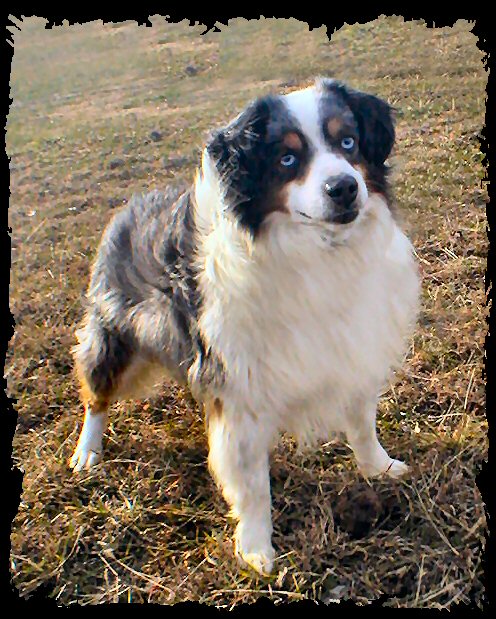 |
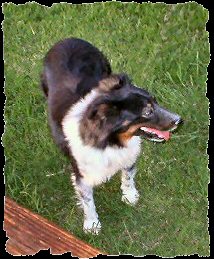 |
| Booger is 13 inches tall | Jazz is 13 1/2 inches tall |
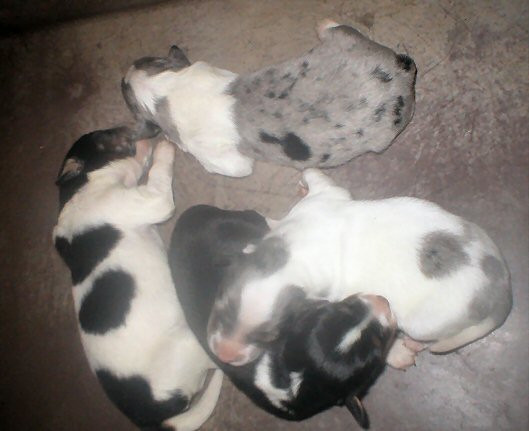
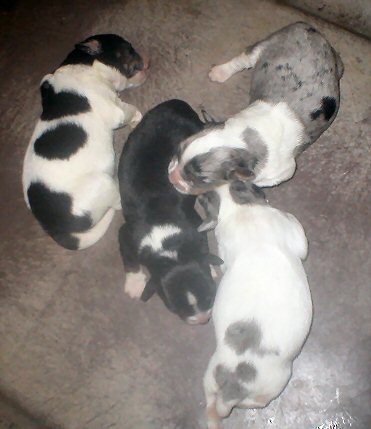
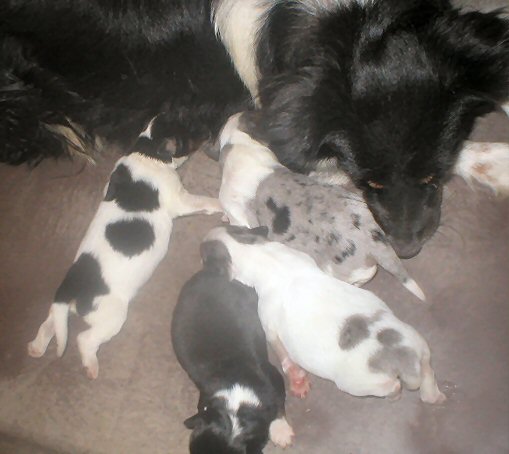
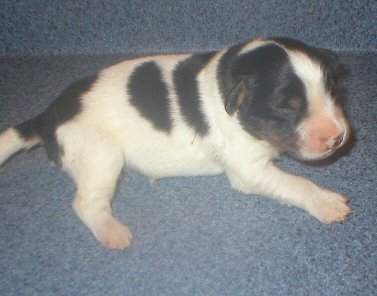
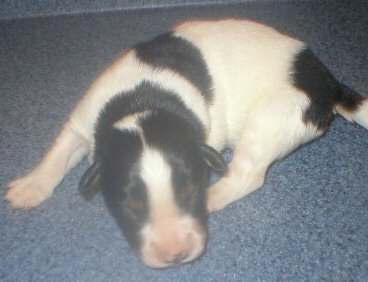
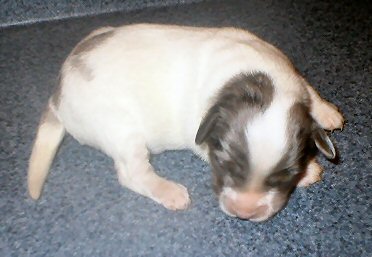
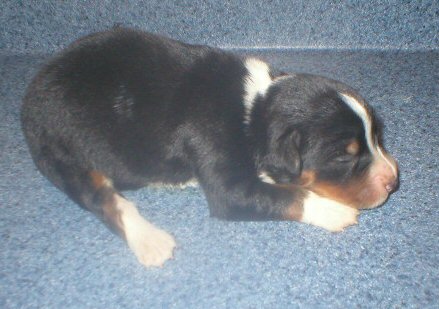
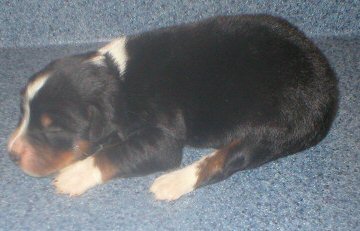
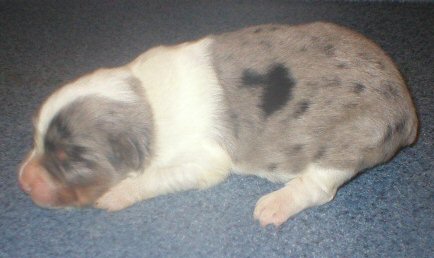
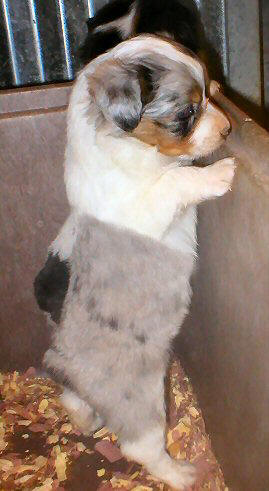
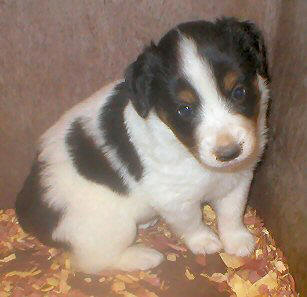
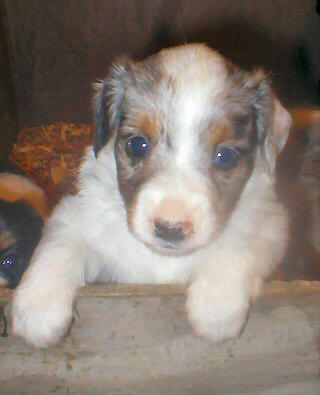
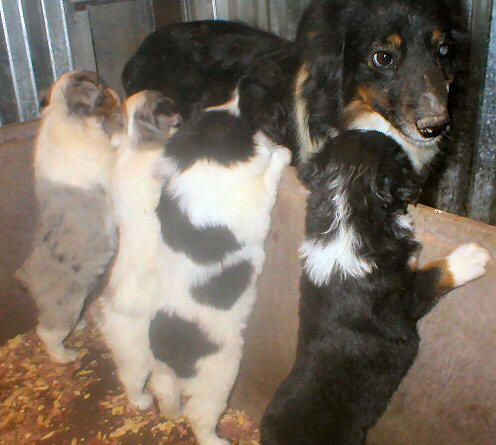
Jazz's puppies pictured here at just a couple of days old. She had a smaller litter this time and had 2 pattern whites, (we expected one or two!) and a normal blue merle male and black tri female. The pattern whites have color everywhere they need it, on their ears and eyes. The blue merle pattern white is NOT a homozygous merle. That is a totally different gene and genetically impossible when one of the parents is a tri. Check out the links below for more info on these interesting genetics!
  |
 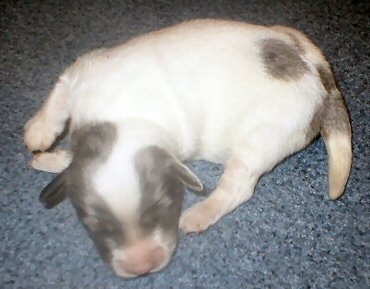 |
| Black tri pattern white male $650 SOLD! Thanks Brenda! |
Blue merle pattern white female $850 SOLD! Thanks Brenda! |
  |
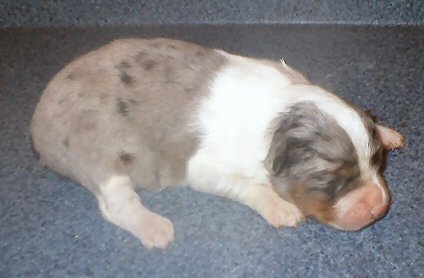  |
| Black tri female, partial collar, TONS of copper. TOY $900 | Blue merle male, full collar, maximum white. We're keeping him to replace Booger! |
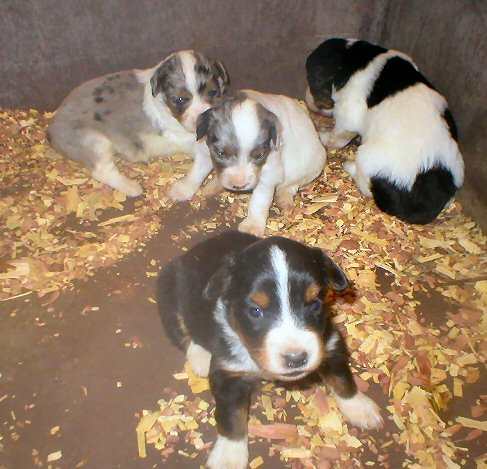
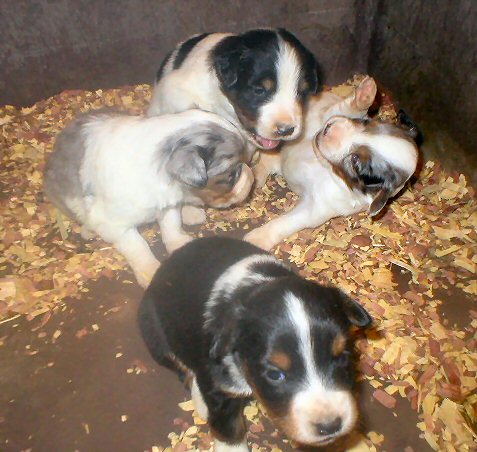
above pics taken October 27th.
 |
 |
 |
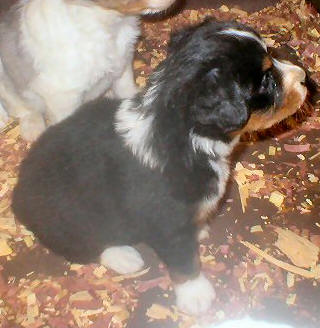 |
| Blue Merle Male | Pattern white black tri male | Pattern white blue female | Black tri female |
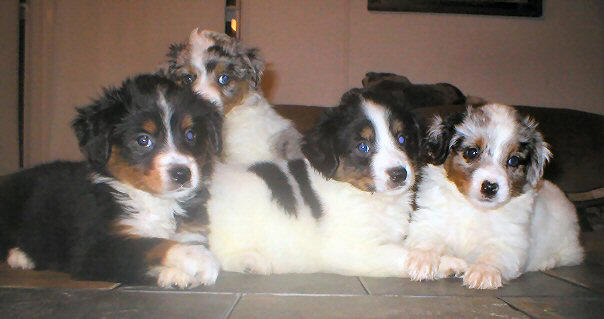
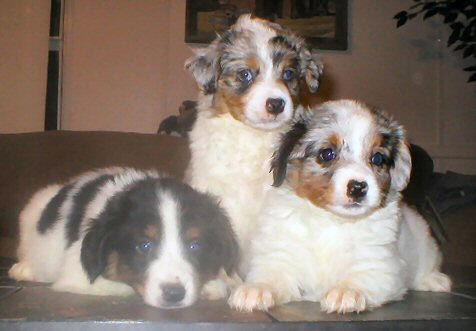
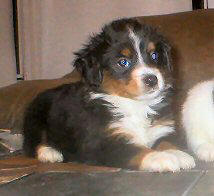
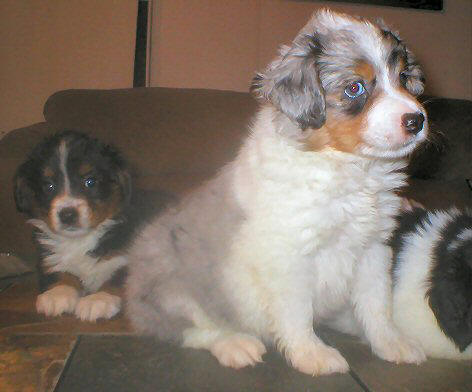
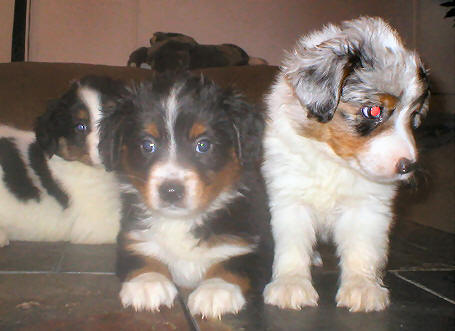
Pictures above taken November 21st!
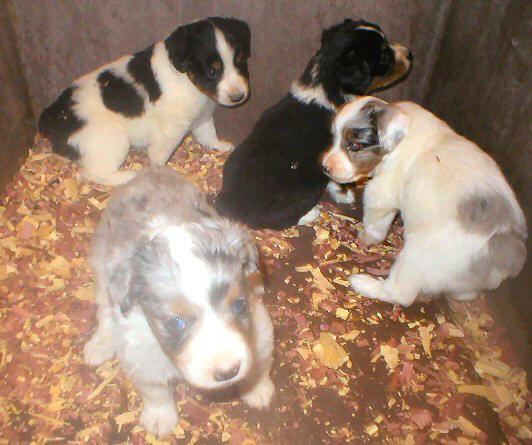
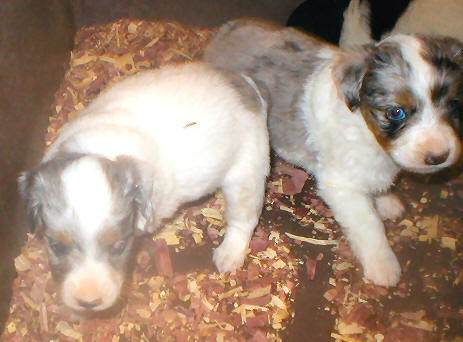
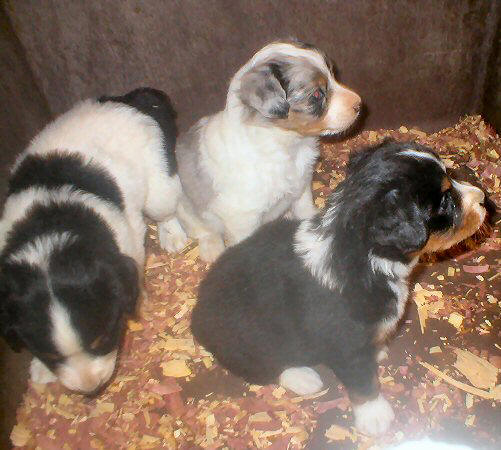
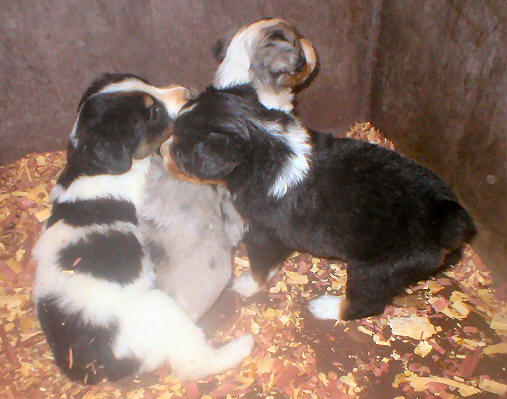
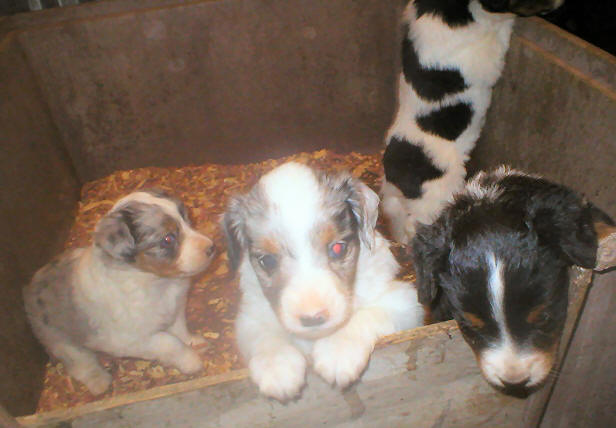
Above pictures taken November 7th.
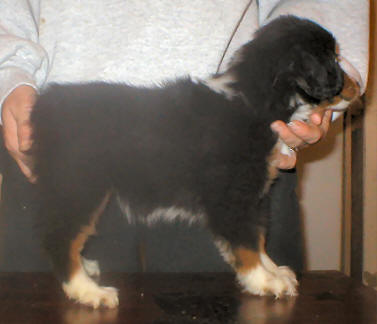
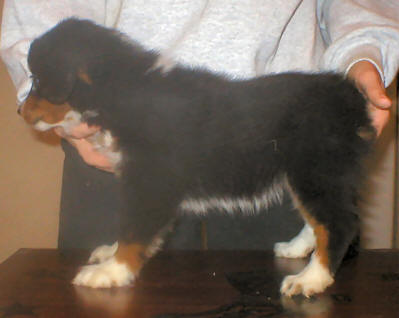
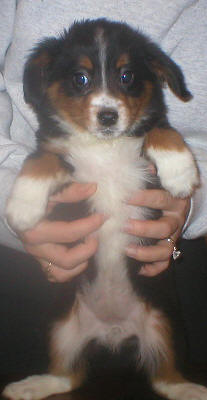
Updated Dec. 7th
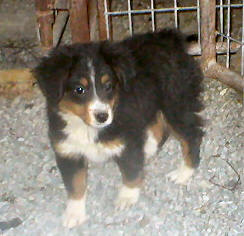
I have kept back a female out of Jazz & Booger's last litter and at 6 months she only weighs 11 lbs and is 11 inches tall. A friend of mine has the pattern white girl from the last litter and she is also very small!
| I've done quite a bit of
research on aussie color genetics, but hadn't heard of color
headed whites (or pattern whites) out of a merle to tri
breeding. I want to share with you what I found!
Apparently, since Jazz has heavy ticking, this enhances her
chance to throw pattern whites especially when bred to a dog
that carries genes for more white trim as apposed to a dog that
carries for less white. (less white is a more dominant
gene) These dogs are not merle to merle, see her
first litter with Opossum, they had a
normal litter. (actually with little white.) For more info on
this link.
Pattern White Dogs
For another interesting page,
Click Here
(Colored Headed Aussies and Pattern Whites) An interesting thing I found on that page... Minus Modifiers Take some time to look at these pages. They are very interesting! There is a lot of info about other aussie genetics on there too! Minus modifiers act to remove pigment. White toes on Labradors and Dobes are often the result of minus modifiers acting on an otherwise self colored animal which lacks any white spotting genes. If a spotting pattern is present, such as the Irish spotting pattern (or ticking) in most collie breeds, any minus modifiers present will enhance its effect and may be responsible for collars and blazes exceeding their boundaries. |
Click here to see Jazz & Booger's April 2005 puppies!
October
11, 2005